
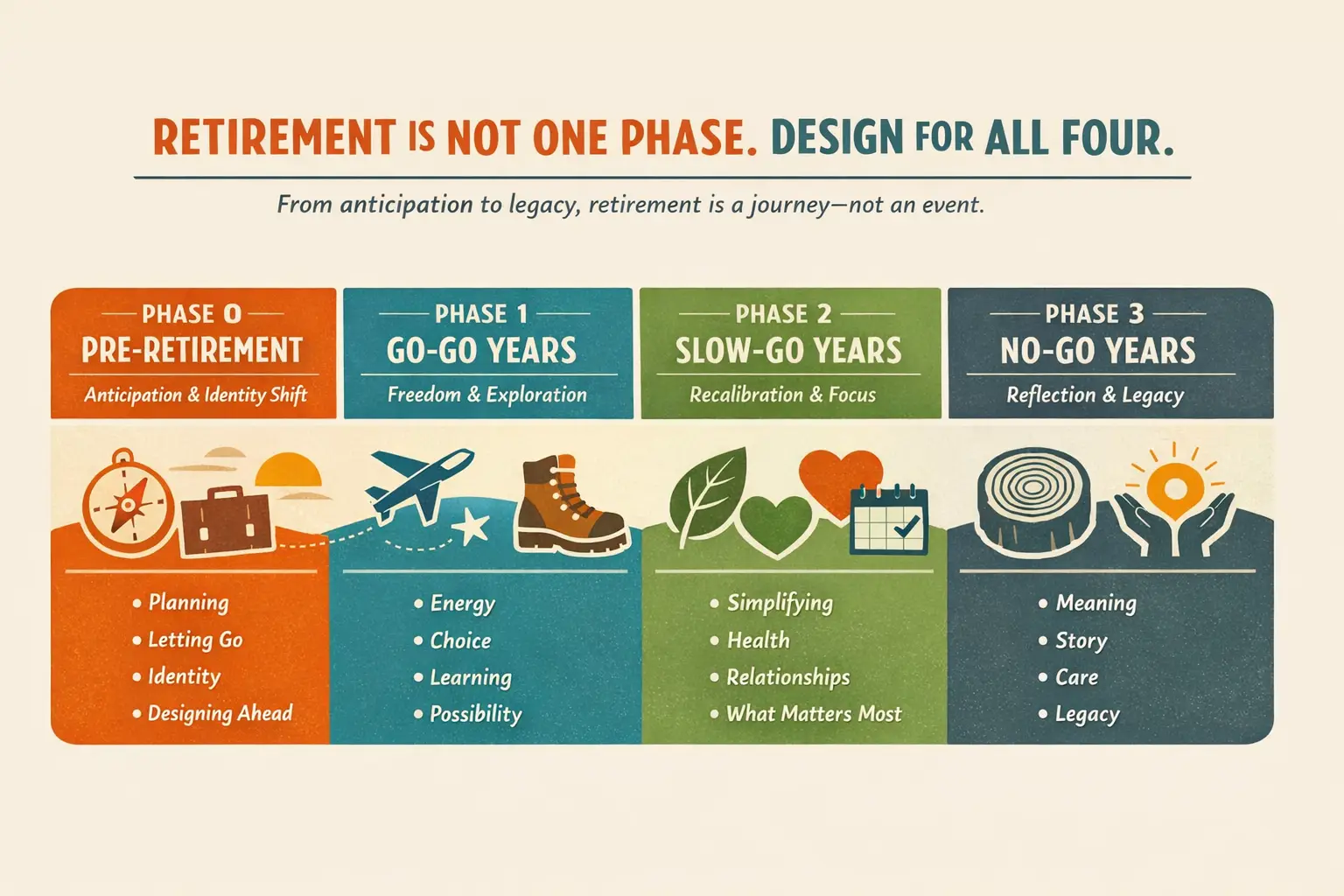
As a retirement coach, my initial focus with soon-to-be retirees includes exploring these phases so they can make better decisions today—about time, money, health, purpose, and relationships—that hold up over decades. Ultimately, the goal is the intentionally design retirement versus simply winging it.
Retirement isn’t a finish line—it’s a multi-phase redesign of life. One of the most common mistakes people make is planning for retirement as if it’s static. In reality, retirement unfolds in four distinct phases, each with distinct needs, energy levels, and priorities.
Phase 0: Pre-Retirement Anticipation
This phase often begins 5–10 years before leaving full-time work. The focus is usually financial, but that’s only part of the picture. Emotionally, people are still anchored to their professional identity—even as they begin to feel restless, burned out, or curious about what’s next.
Key questions:
- Who am I when my title goes away?
- What do I want more of—and less of—in my next chapter?
- What needs to be designed now, not later?.
- Am I ready financially for retirement?
Phase 1: The Go-Go Years
The early phase of retirement is typically marked by higher energy, curiosity, and freedom. Many retirees travel, pursue long-delayed interests, start encore work, or reengage in learning and community life.
From a retirement coaching standpoint, this phase is about intentional expansion, not just staying busy.
Key Retirement by Design questions:
- How do I want my days to feel now that work no longer defines them?
- What experiences matter most while my health and energy are strong?
- How much structure versus flexibility supports my well-being?
- What does “enough” look like—financially and emotionally?
Phase 2: The Slow-Go Years
As retirement progresses, the pace naturally changes. Energy may be more selective. Travel often becomes simpler. Reflection deepens, and priorities narrow toward what truly matters.
This phase benefits from thoughtful redesign, rather than quiet withdrawal.
Key Retirement by Design questions:
- Which activities still energize me—and which ones feel draining?
- How do I maintain purpose as I simplify my lifestyle?
- Who are my core relationships, and how do I invest in them?
- What daily routines best support my physical and emotional health?
Phase 3: The No-Go Years
Later retirement may bring increased limitations, but it can still be rich with meaning. Focus often shifts toward comfort, care, connection, and legacy. Retirees who face health challenges or serve as caregivers for a partner or relative may cut back on travel and adventure.
Retirement coaching in this phase centers on continuity, dignity, and contribution, not decline.
Key Retirement by Design questions:
- What does quality of life mean to me now?
- How do I want to be supported as my needs change?
- What legacy—relational, personal, or community-based—do I want to leave?
- What conversations or contributions still feel unfinished?
Planning for All Three Phases
The most resilient retirement plans anticipate all four phases—not just the active early years. Retirement by design is about aligning values, energy, and purpose across time, so your retirement remains meaningful as life evolves. The mistake isn’t retiring too early or too late. It’s planning for one moment instead of the phases that follow. A retirement coach can play a critical role in helping retirees create a fulfilling third act.
# # #
(c) Kevin Nourse, 2026. You’re welcome to share or republish this article with proper attribution and a link back to the original source.
Dr. Kevin Nourse is a certified retirement coach helping people flourish in retirement. He founded Nourse Leadership Strategies, a coaching firm based in Southern California. Contact him at 442.420.5578 or kevin@nourseleadership.com
Want the bigger picture?
This blog is part of a broader body of work on leadership transitions, executive development, and Retirement by Design.